About VDA

One craft.
No compromise.

Veterinary Dental Arts exists for a simple reason: most pets who need dental care never get it. We are here to change that — honestly, accessibly, one patient at a time.

Built on a simple idea:
what's good for people is good for business.

Improving Lives

The reality is that 80% of dogs and 70% of cats have some form of periodontal disease by age three,1 and the bacteria from periodontal disease travels through the bloodstream. Here's the uncomfortable part: only 10%–15% of pets ever receive professional dental care at the veterinarian's office.2 Not because owners don't care, but because the systems are dated — unclear pricing, fragmented communication, and veterinarians trying to do everything, rather than one thing well.

Small and toy breeds carry the heaviest dental burden. Tight jaws, crowded teeth, and longer lifespans mean their dental needs are ongoing — not one-and-done. Larger breeds need regular checks too, and we find plenty. But if you have a small dog, dental care isn't optional maintenance. It's essential to health care.

Between how common dental disease is and how rarely it gets treated; that is what VDA was founded to change. Luke Anderson, DVM started this practice with a straightforward conviction: focused dental care, done at a standard worth doing, priced so people actually come. Not dramatically, not all at once. Just steadily.

This is a practice where you can see everything that happens. Where the cost is clear before anything begins. Where teams have the support and autonomy to do what is right. Where education and improvement are constant. This is not a marketing position. It is the operating model because we keep finding ways to do things better.

"What's good for people is good for business" — the line cuts two ways: Outward, it means more pets get the care they need if the business thrives. Inward, it means if the business thrives, so do the people that care for pets. Our teams are treated well, paid fairly, and empowered to grow. Our clients are respected and educated. A practice can't deliver steady, thoughtful care if the people doing the work are burning out or are not able to earn your trust.
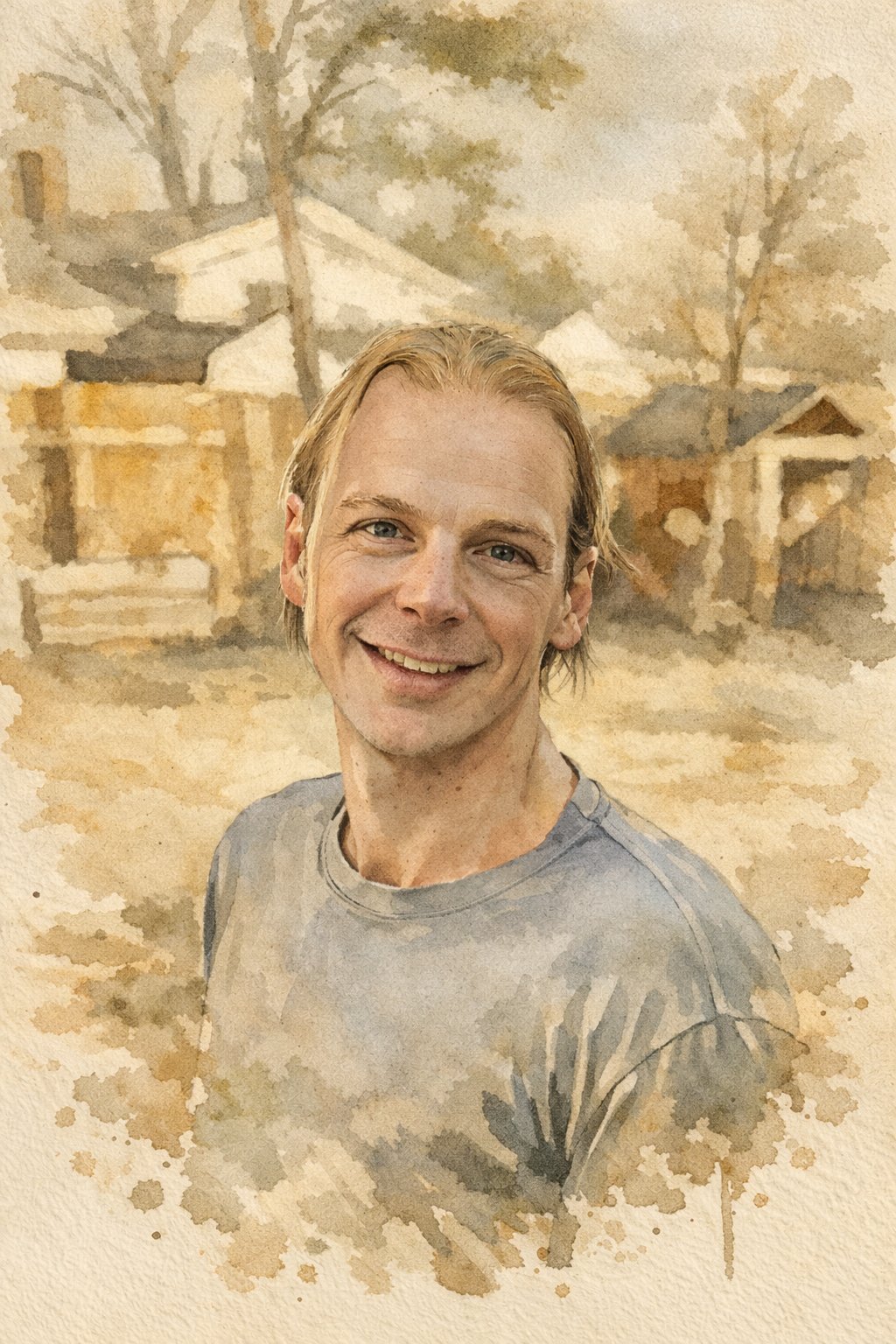
The Founder

Luke Anderson, DVM.
The person behind the practice.

A warm-sepia watercolor portrait of Dr. Luke Anderson, DVM — founder of Veterinary Dental Arts — smiling in a Fort Collins yard with houses and trees softly painted behind him.

Luke Anderson, DVM
Founder & Veterinarian

Dr. Luke graduated from Ross University School of Veterinary Medicine in 2012. He did general practice and relief work for years afterward, gaining an understanding of the diverse nature of the industry — its beauty, its strength, and its pitfalls — before moving into emergency medicine and spearheading the ground-up development of a specialty and emergency clinic in 2019.

In 2023 he moved his family to Fort Collins to be present for his two kids, Ronin and Silas, while his wife embarked on her own path to becoming a human doctor.

Now he focuses on pet dental care, the most underserved area of veterinary medicine. He saw a better way to structure a practice — one that serves the people who care for animals, staff and owners both, turning traditional models on their head.

When asked what he does in his spare time, he replied: "Time is not spare. How we use each and every moment matters. Time is the only thing we cannot get back. We must use ours and others wisely." He explores the world with a curious eye — climbing rocks, getting muddy, finding humor in life's ironies — always looking for new ways to help.

The Team

Artists, scientists, & caretakers.

We empower a core group while regularly pulling in skilled, passionate providers to continue growth and keep us out of our own echo chamber.

How We Operate

Three commitments
that define the practice.

One craft, no compromise

We do veterinary dentistry. That is it. No general medicine, no boarding, no volume targets. Every system, every protocol, every training hour serves one purpose.

Transparent by default

Clear packaged pricing. No exam rooms. Even every team member knows where money goes, making sure the company is accountable to its mission of providing accessible care in a sustainable way. We will never exceed a quote without your consent or quote high to limit internal risk.

Empowered to help

Our team has the knowledge and autonomy to do what is right for the patient in front of them. No corporate approvals. No upselling or production goals. Placing honesty and trust above all else, doing the right thing, carries everyone forward.

What We Believe

Values that
shape the work.

I
Mission-driven, not metrics-driven

We measure success by meeting expectations and measuring outcomes. For patients — comfort, longevity, quality of life — not by revenue per procedure or number of cases per day. We ask one question, all the time: Does this improve lives?

II
Efficiency is a form of care

Minimizing anesthesia time isn't a cost-cutting measure. It is the standard of care. Our workflow is designed around it. Your pet spends less time under, you spend less time worrying, and we spend less time doing anything that isn't beneficial to the pet.

III
Education over alarm

Communication and collaboration drive the medicine. Not all patients need the same things. Through education and discussion we can figure out what works best for every circumstance.

IV
Accessibility is part of the mission

Dentistry is one of the most frequently deferred veterinary procedures, and cost is the most common reason owners decline care. Pricing that is transparent, bundled, and reasonable isn't generosity — it's the job. Nobody should need a spreadsheet to figure out what a teeth cleaning costs.

"What's good for people is good for business."

Outward

More pets get care. The practice works because the door is open — clear pricing, clear process, reduced friction between a problem and a fix.

Inward

The team is paid fairly, trained thoroughly, and given both autonomy and room to grow. Good care is not done by worn out people.

— The operating belief behind VDA

Sources

  1. American Veterinary Dental College and American Animal Hospital Association — periodontal disease prevalence in companion animals by age three.
  2. Banfield Pet Hospital, State of Pet Health Report — proportion of dogs and cats receiving professional dental care annually.